

Before any home renovation starts, define your scope, budget, team, permits, materials, and site plan. Customers often choose finishes first, then face missed costs, delays, or approval problems. A clear home renovation checklist keeps each decision tied to your real needs.
After more than 10 years handling Singapore home renovation work, we see the same problems often. Customers struggle with unclear quotes, late material choices, and last-minute changes. You can solve this by planning every major decision before contractors enter your home.
This guide shows what to check before your first renovation day. You will plan goals, costs, contractors, approvals, deliveries, access, and site preparation. You will also learn how to avoid common HDB, condo, and landed-home mistakes.
Define Scope and Lifestyle Goals
Define what your home must do before deciding how it should look. Your scope should solve daily problems, not copy another home. This keeps design choices useful and easier to price.
Customers often spend too much on looks before fixing layout problems. This problem happens when needs stay unclear. A room-by-room plan keeps your renovation scope focused.
Identify Problems
Identify the problems that make your current home hard to use. Check storage, lighting, heat, airflow, leaks, wiring, plumbing, and damaged finishes. Customers should also note tight walkways or doors that block movement.
Take photos and write each issue beside the room name. This gives your contractor clear facts during site checks. It also reduces forgotten work after the quote is signed.
Classify Needs
Classify each idea as essential, useful, or cosmetic before spending money. Essential work protects safety, function, or daily comfort. Useful work improves how your family uses the space.
Cosmetic work can wait when the renovation budget feels tight. This simple ranking helps customers protect important items first. It also makes later cost cuts less painful.
Establish Scope
Establish a room-by-room scope before asking firms for final prices. Include hacking, tiling, carpentry, electrical work, plumbing, painting, doors, and fixtures. Add appliance positions and storage needs where they affect built-in work.
The scope should state what stays and what gets removed. This helps each contractor price the same job. It also makes quotation comparisons more fair.
Gather Inspiration
Gather inspiration that fits your layout, budget, and daily habits. Save examples for kitchens, wardrobes, bathrooms, lighting, colours, and storage. Add a short note explaining what you like in each image.
Avoid copying designs that need a very different floor plan. This problem happens when photos guide style but ignore real measurements. Use inspiration as direction, not as a fixed promise.
Establish a Realistic Budget
Build your renovation budget from real work items, then add money for surprises. A single total figure hides where your money goes. Clear cost groups make cuts and upgrades easier.
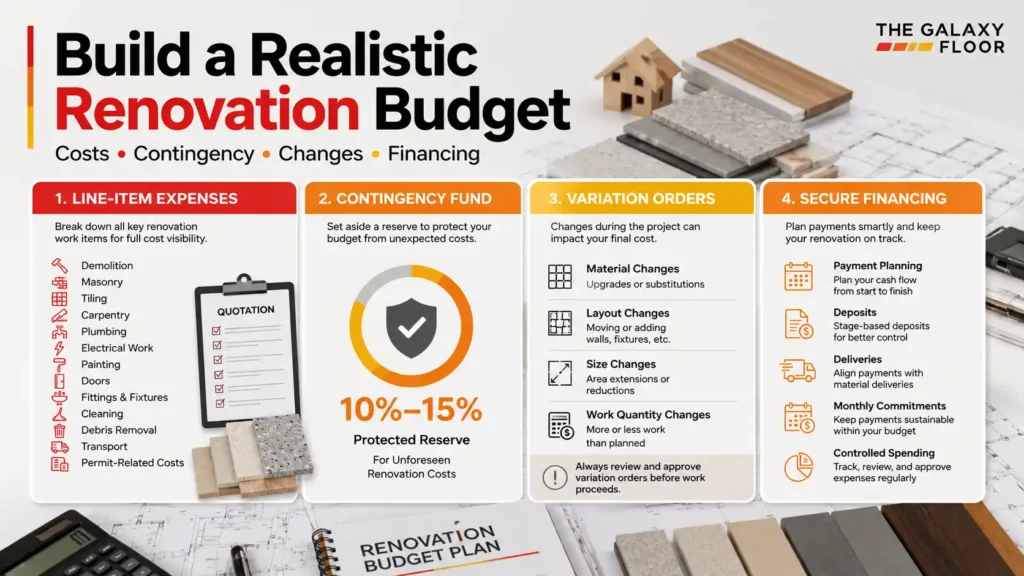
Customers struggle when they treat the first quote as the full project cost. Appliances, loose furniture, moving, and small purchases can sit outside that quote. Keep those costs in your wider home renovation budget.
Line-Item Expenses
Break your budget into clear work items before approving the quotation. Include demolition, masonry, tiles, carpentry, plumbing, electrical work, painting, doors, and fittings. Add cleaning, debris removal, transport, and permit-related costs when they apply.
Check whether each price includes labour and materials. Also check brands, sizes, finishes, and quantities. A low figure can hide missing items.
Contingency Fund
Keep about 10% to 15% aside for unexpected renovation costs. Current Singapore budgeting guidance recommends this buffer for hidden or extra expenses.
Use this money for real surprises, not planned upgrades. Older homes can reveal wiring, plumbing, or surface problems after hacking starts. Your buffer protects the main scope from sudden cuts.
Account for VOs
Plan for variation orders before any work starts. A variation order, or VO, records changes after the agreed quotation. Customers often face VOs after changing materials, sizes, layouts, or work quantities.
Ask for the new price before approving each change. Also ask whether the VO changes the schedule. Keep every approval in writing.
Secure Financing
Secure your payment plan before signing a renovation contract. Your monthly commitments should remain manageable after renovation starts. Keep enough cash for deposits, deliveries, appliances, and unexpected work.
Customers should compare borrowing costs, fees, and repayment terms carefully. Do not use the full approved amount just because it exists. Your financing should support the scope, not expand it.
Build Your Professional Team
Choose a team that matches your design needs, project size, and control level. The cheapest firm is not always the best fit. Clear roles reduce missed work and blame later.
Customers struggle when nobody owns design, site coordination, or approval tasks. Decide who handles each task before signing. This makes your renovation contractor relationship easier to manage.
Select Firm Type
Choose an interior design firm, design-build firm, or direct contractor based on your needs. An interior design firm can guide layout, finishes, drawings, and project coordination. A direct contractor suits customers with a clear design and simpler scope.
A design-build firm handles design and construction under one team. This can reduce handover gaps between designer and builder. Compare the actual services, not only the firm label.
Verify Credentials
Verify the licences and registrations required for your planned work. HDB owners must use contractors listed in HDB’s Directory of Renovation Contractors.
Electrical work needs an EMA licensed electrical worker. HDB also requires BCA-trained installers for air-conditioner installation work. Check who will perform each regulated task before work begins.
Compare Quotations
Compare quotations using the same scope, materials, sizes, and work standards. Customers struggle when one quote includes items that another quote excludes. Ask each firm to state missing items clearly.
Check payment stages, product brands, material thickness, hardware, warranties, and disposal costs. Compare the whole package, not only the final number. Clear details reduce later disputes.
Sign a Contract
Sign only when the contract matches the final scope, quote, drawings, and schedule. The contract should explain payment stages, changes, delays, defects, warranties, and cancellation terms. It should also identify the responsible company and project contact.
Customers should read every attachment before paying a large deposit. Ask for unclear terms in simple language. Keep the signed contract, drawings, and receipts together.
Logistics, Permits, and Administration
Complete approvals, utilities, ordering, and measurements before the planned start date. These tasks often control whether site work can begin smoothly. Missing one item can stop several trades.
Singapore rules differ between HDB, condo, and landed homes. Customers should confirm requirements for their property and exact work scope. Do this before demolition or installation starts.
Apply for Permits
Apply for every required renovation permit before starting controlled work. HDB says some renovation works need permits, while others do not. Certain wall changes also need HDB evaluation before approval.
Condo owners should check their MCST rules before renovation starts. Some strata works can also need BCA, URA, or other approvals. Never assume one approval covers every work type.
Activate Utilities
Make sure water and power are active before workers need testing or installation. Electricians need power for checks, tools, and final testing. Plumbers also need water for testing fittings and drainage.
Customers should confirm access to utility points before site work. This is especially important in vacant or newly handed-over homes. Small delays here can block several tasks.
Order Material Early
Order long-lead materials early after designs and quantities are confirmed. Custom items, special finishes, and imported products can affect your start sequence. Customers struggle when key materials arrive after related workers leave.
Confirm model numbers, colours, sizes, quantities, and expected delivery dates. Do not order custom items from rough measurements. Final site details should guide the purchase.
Confirm Measurements
Confirm final site measurements before producing carpentry, glass, stone, or custom fittings. Small measurement errors can affect cabinet doors, worktops, appliances, and walkways. This problem happens when drawings use old or estimated dimensions.
Measure again after hacking when finished surfaces will change. Record critical appliance dimensions too. Your contractor should match site sizes with approved drawings.
Final Checks Before Renovation Starts
Run one final check across scope, approvals, materials, access, and dates. This is not a new planning stage. It confirms that earlier decisions are ready for construction.
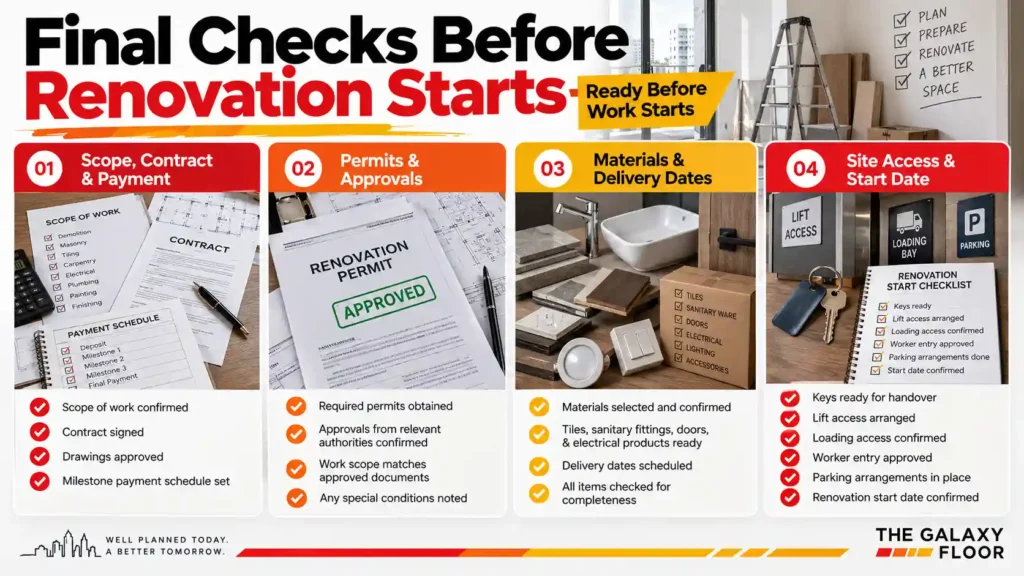
Customers should resolve open questions before workers arrive. A short pre-start meeting can catch missing details. This protects the first week from avoidable stops.
Confirm Scope, Contract, and Payment Schedule
Confirm that the signed scope, contract, and payment schedule all match. Every major work item should appear in the agreed documents. Payment stages should link to clear project milestones.
Customers should flag any verbal promise missing from the paperwork. Add approved changes before work starts. This keeps expectations clear for both sides.
Verify Permits and Approvals
Verify that required permits and property approvals are already approved. Do not rely on an application receipt alone. Check the approved work scope against the planned site work.
HDB owners remain responsible for ensuring renovation follows HDB rules. Condo owners should also confirm their MCST conditions. Keep approval records available during the project.
Confirm Materials and Delivery Dates
Confirm every early-stage material and its delivery date before site work begins. Check tiles, sanitary fittings, doors, electrical items, and other sequence-critical products. Customers should also confirm who receives and checks each delivery.
Late changes can affect both price and schedule. Replace unavailable items before workers need them. Record approved substitutes in writing.
Confirm Site Access and Start Date
Confirm keys, lift access, loading rules, worker access, and the exact start date. Condo projects often follow building access and renovation rules set by their MCST.
Give your contractor all approved access details before the first delivery. Check parking or loading limits where relevant. This prevents crews from losing time at the entrance.
Final Pre-Construction Site Prep
Prepare the home so workers can start safely and without damaging personal items. Remove loose items and protect anything staying inside. Clear access also helps workers move materials faster.
Customers should separate valuable belongings from the work zone. Dust can travel beyond the room under renovation. Plan protection before demolition starts.
Clear the Space
Clear furniture, clothes, electronics, and fragile items from active work areas. Move important items away from dust, vibration, and worker traffic. Label anything that must remain.
Customers staying elsewhere should remove daily essentials before handover. Keep passports, documents, jewellery, and medicines with you. Do not leave valuables inside open work zones.
Document Conditions
Photograph the home’s condition before contractors begin any work. Capture floors, walls, doors, windows, fixtures, common corridors, and lift areas. These records help separate old damage from new damage.
Use date-stamped photos when possible. Keep wide views and close details. Condo owners should also follow any MCST condition-record rules.
Notify Neighbors
Tell nearby neighbours when noisy renovation work will begin. This simple step gives families time to plan around disturbance. It also reduces avoidable conflict.
HDB and condo renovations must follow property-specific noise and work rules. Condo noise issues are generally managed through the relevant MCST. Share your contractor’s contact if building rules require it.
Secure Housing
Arrange temporary housing when dust, noise, or utility shutdowns make staying difficult. Full renovations can affect bathrooms, kitchens, power, water, and safe walking paths. Children, older adults, and pets can struggle more.
Customers should confirm move-out and move-in dates with the work schedule. Add a few flexible days for final cleaning or fixes. Avoid planning a tight move immediately after handover.
Frequently Asked Question
How long does a home renovation take in Singapore?
A typical HDB renovation takes about six to ten weeks. Condos often take about eight to twelve weeks. Larger scopes, custom work, and approval delays can extend the timeline.
When should I buy appliances?
Choose appliances before final carpentry drawings, then order them around confirmed delivery needs. Built-in ovens, fridges, hobs, washers, and air-conditioners affect sizes and service points. Confirm model dimensions before cabinets or counters enter production.
How much contingency budget should I prepare?
Keep about 10% to 15% of your renovation budget as contingency. Singapore budgeting guidance uses this range for hidden costs and project changes. Keep the fund untouched unless a real unplanned issue appears.
When should I inspect defects?
Inspect new HDB defects before renovation begins and before contractors alter those areas. MyNiceHome says new owners should report defects within 30 days of key collection. Take clear photos and complete rectification before covering affected finishes.
How much should I budget for an HDB renovation?
For 2026, 3-room to 5-room HDB estimates range from S$36,100 to S$97,000. MoneySmart lists different ranges for BTO and resale flats. A 4-room estimate spans about S$51,000 to S$80,300, depending on flat condition.
Do I need permits for all renovations in an HDB?
No, some HDB renovation works need permits, while others do not. HDB requires owners to follow the rules for each planned work type. Your HDB-listed contractor should submit required renovation applications before controlled work starts.
Can I stay at home during the renovation?
You can stay during light work, but full renovation often makes daily living difficult. Dust, noise, blocked rooms, and utility shutdowns can disrupt normal routines. Temporary housing is usually safer and easier during major hacking or wet-area work.
Conclusion
A strong home renovation checklist turns many moving parts into clear decisions. Define your scope before choosing finishes. Build your budget from detailed work items. Keep approvals, materials, and measurements ready before site work.
The right team should make responsibilities, costs, and changes easy to understand. Check required HDB renovation permits, MCST rules, and contractor credentials before work begins. Confirm everything again before handing over your keys.
Singapore Home Renovation Services can guide homeowners through planning, coordination, and renovation work in Singapore. We focus on clear scope, practical choices, and careful preparation. Contact us before your renovation starts, and we will help plan the next steps.